Episode Transcript
[00:00:00] Speaker A: This is Constructive Voices. Constructive Voices, the podcast for the construction people with news, views and expert interviews.
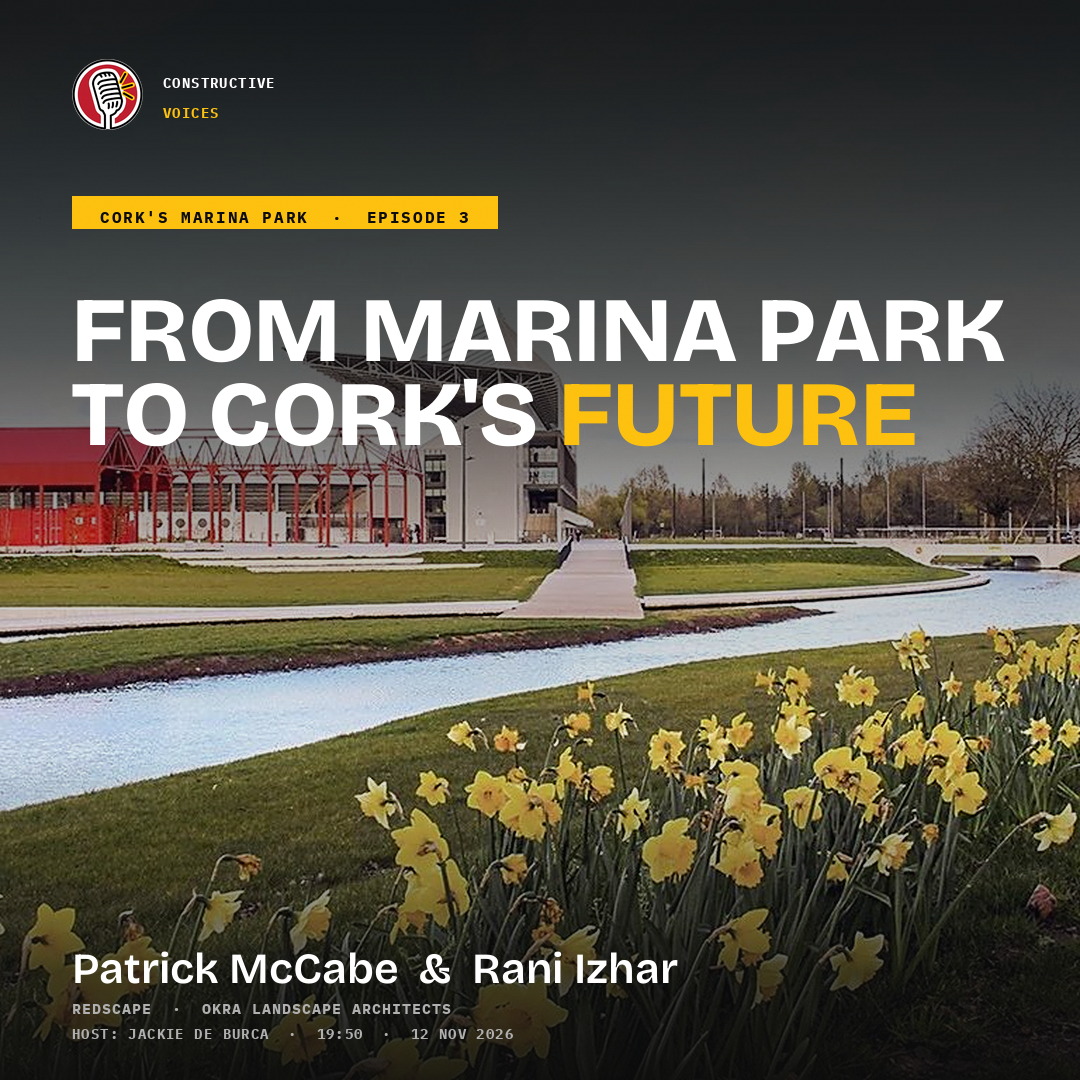
[00:00:10] Speaker B: Hello and welcome back to Constructive Voices. I'm Jackie De Burka and this is the third and final episode of our series on Cork's Marina park.
In episode one, we walked through the vision behind the project, its 15 year making and the heritage its designers pulled out of the undergrowth.
In episode two, we went underneath the park into the philosophy of living with water that shapes the whole thing.
Today's episode asks what has actually happened since the ribbon was cut five years on in 2026 from phase one. Marina park isn't just a park. It's a catalyst for the biodiversity that's quietly moved back in for the community that's reclaimed the promenade and for a wider regeneration of Cork's docklands that is still unfolding.
Patrick McCabe of RedSC and Rani Ishar of Okra landscape architects return one more time to tell us what they've seen and where Cork is going next.
This is episode three, from Marina park to Cork's future.
[00:01:19] Speaker C: Ashwell Lee is a very, very important component in the biodiversity of Cork. I was there a couple of weeks ago and there's a new little cafe there in the marina.
I can't remember the name of it, but it's a great place. And I was looking out at the water and there was the lovely pontoons of the boat clubs down on the lee.
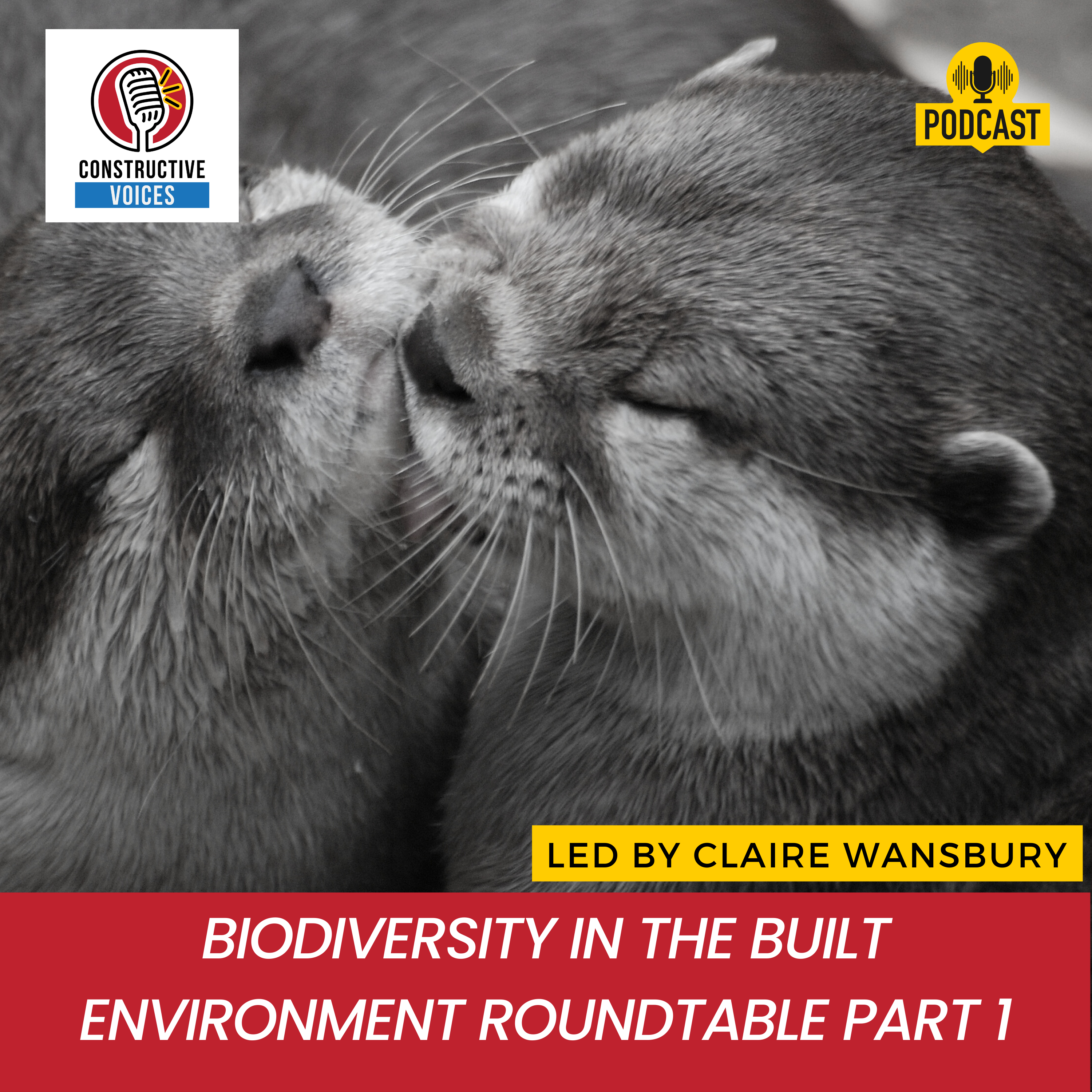
And you could hear the whistling on these otters walking around in these pontoons. I mean, it was just fantastic. You know, it's kind of a prime species already there and they actually make their way into the.
Into the Marina park itself. We believe they actually go through the drainage itself and within there, then you have the heronry within the Atlantic Pond itself. So there's quite a rich biodiversity within there. And the basis of that was retained was mainly the water along Monaghan Road itself. And that is a permanent water feature. And that goes up and down, if you like, with the rainfall coming through the site. And that formed, if you like, the backbone of the biodiversity moving through it as well as the lee. And then we then layered on the whole idea of planting with pollinator planting, retaining older trees and adding new trees into that to kind of fill in, if you like, the profile for the ecological gradient within the site. Gradient just means that you have lots of different habitats really, for the animals that are there. So that's how we approached that particular issue of biodiversity. So there's all kinds of connections within, within the project area itself, both wet and Dry.
[00:02:59] Speaker D: As soon as you mentioned the otters, I think, would we start to compare what's happened in Singapore to Marina park and Cork? Perhaps?
[00:03:08] Speaker C: Now you have to inform me of what's happening in Singapore. I'm not so sure.
[00:03:12] Speaker D: Singapore, like, have, you know, the work they've done there. I think one of the. It's like one of these, you know, picture postcard situations, Patrick, where you see the otters, like in all the photos you see of Singapore in recent times with whatever, you know, with the work they've done. It's like the otters seem to be sort of like the symbol
[00:03:29] Speaker C: of
[00:03:30] Speaker D: whatever, you know, the progress that they've made, that they've made there, you know?
You know.
[00:03:36] Speaker C: Yeah, I think that's important. I think. I think. I mean, this idea of rewilding obviously can be taken to many different levels and it's been very fantastically successful.
But I think this idea of giving much more space to kind of more extensive planting and planting regimes, that we don't go around mowing each piece of grass and trying to control each piece of growth, and that we give more space within our parks to those kinds of. That kind of thinking. I think that's really happening a lot throughout the country.
We haven't brought back the wolf or anything like that.
That's happening in the Netherlands. It's very, very controversial.
But this idea of extensive forms of even maintenance, the reintroduction of goats into large parkland areas and different kinds of cattle as well, for example, is tried and tested and works well in bigger park areas. But the whole idea within the kind of the urban park is the whole idea of this extensive planting is very, very important and giving nature more space.
[00:04:41] Speaker D: Otters in the drainage, herons in the Atlantic pond rewilding. Ideas filtering down from projects like Singapore into Irish urban design, all of that is the ecological result.
But none of it would hold if the design didn't actively protect it.
For Rani Ishar at Okra, that protection is built into Marina park through a deliberate split between places people can walk and places they cannot.
[00:05:10] Speaker E: There is also, in the Irish tradition, in the old tradition, kind of the Celtic tradition, the Druids, kind of the relation to the importance of trees and there's a richness of kind of connection to the nature entries. So this is just kind of interesting that all this infrastructure is there kind of. You just have to kind of make it accessible.
And we have worked with the council then also to create places that are only nature, that are not accessible for people that make kind of their Available kind of, or how to balance these, the needs of the flora and fauna, the needs of recreation. So there are areas where nature only, so people do not access them.
So they're also kind of the area of lower maintenance. You know, you don't have to maintain to a higher level of a park, the whole area that there's a balance of nature and recreation. That was an interesting route to go kind of through the park. And I think that there is a certain balance achieved there at the moment. What are woodlands? What that are not accessible at all?
[00:06:28] Speaker D: That was one of the questions really. You know, on one hand the park has been described as a biodiversity project, but of course as a public space project on the other. And that is the fine balance that you've just described, isn't it? How do you manage to keep one ambition from not undermining the other one?
[00:06:46] Speaker E: Yeah, I think that that's interesting. If you design it properly and you kind of create these roots that are accessible and roots are not accessible, people understand it also and respect it better. There is a place, you give place to nature also and to areas that have to regenerate. When we came to the park, we noticed that, you know, you notice through the planting where there's overreach, soils that need to be regenerate.
You have to assist a with the process of enhancing biodiversity and regenerate landscapes through different clearings and natural succession processes. So these are things that we establish also with the council through a regime of maintenance and how to approach this with a kind of biodiversity approach or priority. It is important and I think long term management and long term maintenance of these areas are very super important. I mean we can design whatever but it has to be maintained to a certain level. And I think Cork City Council are quite dedicated and have a good understanding of this requirement and the commitment through the years. So I think through this process of generating this area that the public is so enthusiastic exhaust and use so intensively, there's also recognition from Cork of the need to have dedicated maintenance and long term maintenance plans for the area. And again, you have to balance as we mentioned, and not everything has to be kind of manicured to the same level and the area that are more natural, area that are more highly maintained. So this kind of balance that is interesting and makes it realistic also for the long term, also from economically but also from ecologically
[00:08:45] Speaker D: nature only zones, a council committed for the long term, a maintenance regime that doesn't try to manicure everything equally.
That's one half of what makes Marina park work.
The other half is what happens on the accessible side. The 10,000 walkers, a weekends, the running clubs, the kids on skates, and a historic promenade the Cork had quietly forgotten was already there. Patrick McCabe picks up the story.
[00:09:15] Speaker C: I would like to speak for them, to be honest. That's not really my role.
But I mean, from my impression is that.
My impression is that it's become a kind of a destination. And that's helped not just by the park.
There's also other things happening there in the Docklands and the South Docklands. There's places to eat, there's places for amenity indoors. And it's all kind of working off each other and it's kind of catalyzing a new impression of what that part of the city means to people.
And I think that the park is going to be central to that as well for it moving forward. And I think it's becoming more valued and it's more accessible. And I think that already is very exciting. So the marina, for example, it was also part of the concept that we developed and we had discussions with Parkes in there to pedestrianized the marina at the time, and people were very doubtful. So we said maybe we can try it for a weekend and so on. And really that's kind of rediscovering some of the values that were already there in Cork because the marina was always a promenade historically. There's a beautiful photographs, people walking up and down with, you know, beautiful clothes and all that sort of thing. We call it in the Netherlands flaneere. So you're kind of showing off a little bit. You're strolling, but you're also showing off and along the lee and that, that, that beautiful structure is still there. It became quite busy with cars there for a long while, but we simply removed the cars and, and resurfaced it. And it already is just beautiful the way it is a very simple, a simple design. So, so that I, I think, I think all of that makes it more welcoming for people and more inviting and easier to use. And I think that's what people want.
People in Coric ones, anyway.
[00:11:05] Speaker D: That's a great answer. And I love the fact you reflected back onto, you know, sort of like the, the Dutch word that went in one ear and out the other, but the idea of walking and showing off at the same time and like reviving something from the past and bringing it, bringing it into the present, if you like, and something very worthwhile because in, in an age where lots of, lots of, you know, I know you said you have quite a young son, but people who have youngsters who are, you know, of the age of tablets and mobiles and all that sort of stuff, bringing something like that back in, that's community based and by itself is very worthwhile, isn't it?
[00:11:38] Speaker C: Yeah, absolutely. And I think I've seen lots of kids down there really enjoying it and there's a lot of, you know, there's a lot going on there anyway.
There's the boat clubs and there's the gard. There's all sorts of, you know, people running and everything's. There's a lot of sport activities there and training, but basically it's very welcoming as well for children and I think it can be better towards the future, I think it can get better.
So.
So I think there's plenty of scope there for all ages.
[00:12:10] Speaker D: Main initial theme was climate resilience, but there's so much more. There's like a wider regeneration and a huge injection of life, as it seems from what's been done in Marina Park.
[00:12:22] Speaker C: Yeah, I think so. I think it's, again, it's all part of a kind of a moving set of pieces.
And so it's about the, you know, it's about the clubs and the membership, what's happening there. It's that coming together and trying to bring all these different components of the community and people working together.
And again, you've got your entrepreneurs setting up small businesses down there, seeing opportunities. You've got your river kayaking, you've got all kinds of boat activities there.
And again, the backdrop is Park E Quive and there's all kinds of. So it's just bringing all these components together, really, and the park is something like.
It's like a background for all these people doing their thing, really, so.
And just giving them the opportunity to develop in a kind of a nice setting. So, yeah, like I said, it's many different moving parts.
[00:13:20] Speaker D: Clubs, entrepreneurs, cafes, kayaking, many different moving parts, in Patrick's phrase, all catalyzed by a single 36 hectare park.
But the picture gets bigger again when you look at what Cork and Acre are now building beyond Marina park itself.
There's a project on the north docks moving a road back from the water. There's a framework master plan for the south docks and together they complete a promise Cork has been carrying for 300 years.
[00:13:51] Speaker E: Working with the council and part of different multidisciplinary teams. We're working on the north docks. That's the north side of the docks and the different, you know, it's the area adjacent to the Kent Station. So the different. A lot of different things that are happening that the city working on, you know, from a different mobility infrastructure, the light rail and. But we specifically we're working at the moment, There's a road N8 that enters the city, runs along the water.
We're looking to move the road back, back and create amenity space. So bring back the water promenade to the people. And it's a project that has been submitted that got planning approval, part 8 approval. So this is kind of again, it.
There's different kind of active travel project. The Cork is not specifically related to it, that run through it, kind of connect to the wider area. Again, the South Docks is a project that there's a framework master plan that has been approved for it. And more specifically, we're involved as part of the multidisciplinary design team to redevelop the public realm along the water and kind of again, this will facilitate the whole residential development along it. So these are kind of.
And you can see how this is tying back to the Marina promenade.
So in the future there will be a public access from the city center along the water on the north side and in the south side. In the south side it will run connecting to the Marina promenade, which is highly used now towards Blackrock and Blackrock Grasshopper. So this is a huge public amenity back to the people. This is, in a way it's getting back to the old promise of the historical promise of the navigation war. You know, there has been division from Cork City to have this walk along the river. What is unique for Cork is that they are looking into really how to make the Cork identity, the maritime identity, the industrial identity, a key part of the identity of the new developments. So it's not a generic development, docks development or park development.
The arc kind of really it relates back to the history and it becomes unique to Cork. It's not a generic development. So this is something that you see already in different project that happening along the quays. It's something that we definitely work quite a bit in the Marina park in how things relate back to the industrial heritage, to the natural heritage and to the history of the.
So it's this layering is something that is very strong and very emphasized in the different developments that Cork are putting together. And I think this is key in creating something that is unique to Cork.
[00:17:14] Speaker D: Identity as design principle, the layering of maritime and industrial heritage, the patient specific work of making somewhere that could only be Cork.
These are the lessons. Rani Ishar at Aqua Landscape architects would offer other medium sized Cities.
For Patrick McCabe at Redscape, the closing reflection is a quieter one about how design knowledge actually travels.
[00:17:42] Speaker C: It's always interesting when you can learn from all different aspects from both countries and you can't transfer things directly. No, it has to be about fitting and matching and again, it's about learning both directions. So I think it's really interesting to be, if you like, one of the players within this particular profession. So it's very, very interesting for me. Yeah, very exciting.
[00:18:10] Speaker D: It has to be about fitting and matching, Patrick says. Learning in both directions. And that in the end is what Marina park is a place where ideas from the Netherlands and ideas from Ireland have met and both have been changed by the encounter.
A 15 year project, a 36 hectare working landscape. A sponge park that holds flood water and hosts hurling finals on the same ground.
A heritage trail reaching from Blackrock Castle to the city centre.
Otters in the drainage. 10,000 people walking the Lea at weekends. A 300 year old navigation walk finally being completed stretch by stretch under a new generation of designers.
I'm Jackie deburka and I want to say thank you very Sincerely to Patrick McCabe of Redscape and Rani Ishar of Okra Landscape Architects for giving us so much of their time and expertise across these three episodes. And thank you to you also for listening the whole way through.
If you've enjoyed the series, please rate and review Constructive Voices on your podcast app. It genuinely helps others find our show and if you're working on a specific place anywhere in the world or you know someone who is, we'd love to have them on a future Living Places episode.
The have youe say form takes under two minutes. The link is in the show notes. Go to constructive-voices.com episodes one and two of this series are still available. If you've just joined us, this has been Constructive Voices. Thank you for listening.
[00:19:51] Speaker A: This is Constructive Voices.